
Blessed Are Those Who Mourn – Meaning, Biblical Insight, and Spiritual Depth
Introduction: Understanding “Blessed Are Those Who Mourn”
The phrase “Blessed are those who mourn, for they will be comforted” (Matthew 5:4) is one of the most powerful and often misunderstood statements from Jesus Christ in the Sermon on the Mount. At first glance, it appears contradictory. How can mourning—something associated with sadness, grief, and loss—be considered a blessing?
To understand this teaching, we must explore its biblical meaning, spiritual context, Greek translation, and deeper theological significance. This verse is not about emotional sadness alone; it reveals a profound truth about repentance, spiritual transformation, and God’s comfort.
What Does “Blessed Are Those Who Mourn” Mean?
The keyword phrase “blessed are those who mourn” comes from the Greek word pentheō, which means:
- To grieve deeply
- To lament
- To feel sorrow or guilt
- To experience inner brokenness
Meanwhile, the word “blessed” (makarios) means:
- Spiritually fortunate
- Favored by God
- Deeply fulfilled
- In a state of divine happiness
So the verse does NOT mean “happy are the sad people.” Instead, it means:
Those who experience deep spiritual sorrow—especially over sin and brokenness—will receive God’s comfort and restoration.
Biblical Context: The Sermon on the Mount

The verse is part of the Beatitudes (Matthew 5:1–12), where Jesus describes the character of citizens of the Kingdom of Heaven.
The structure of the Beatitudes shows a spiritual progression:
- Poor in spirit (recognizing need for God)
- Mourning (deep sorrow over sin)
- Meekness (humility)
- Hunger for righteousness
- Mercy, purity, peace
So mourning is not random sadness—it is a spiritual response to realizing our condition before God.
Types of Mourning in Matthew 5:4
1. Mourning Over Sin (Spiritual Repentance)
This is the primary meaning of the verse.
When a person realizes:
- Their sinfulness
- Their distance from God
- Their moral failures
- Their need for forgiveness
They experience godly sorrow, which leads to repentance.
This connects directly with:
2 Corinthians 7:10 – “Godly sorrow produces repentance leading to salvation.”
This mourning is not destructive—it is transformational.
2. Mourning Over a Broken World
Many theologians also interpret this verse as sorrow over:
- Injustice
- Violence
- Corruption
- Human suffering
- Global wars and suffering
This includes compassion for:
- The poor
- The oppressed
- Victims of war and violence
This aligns with Jesus weeping over Jerusalem (Luke 19:41).
3. Personal Grief and Human Loss
Although not the primary meaning, the verse also includes God’s presence in:
- Death of loved ones
- Emotional pain
- Life struggles
God does not ignore human grief—He enters it and brings comfort.
Why Mourning Is Considered a Blessing
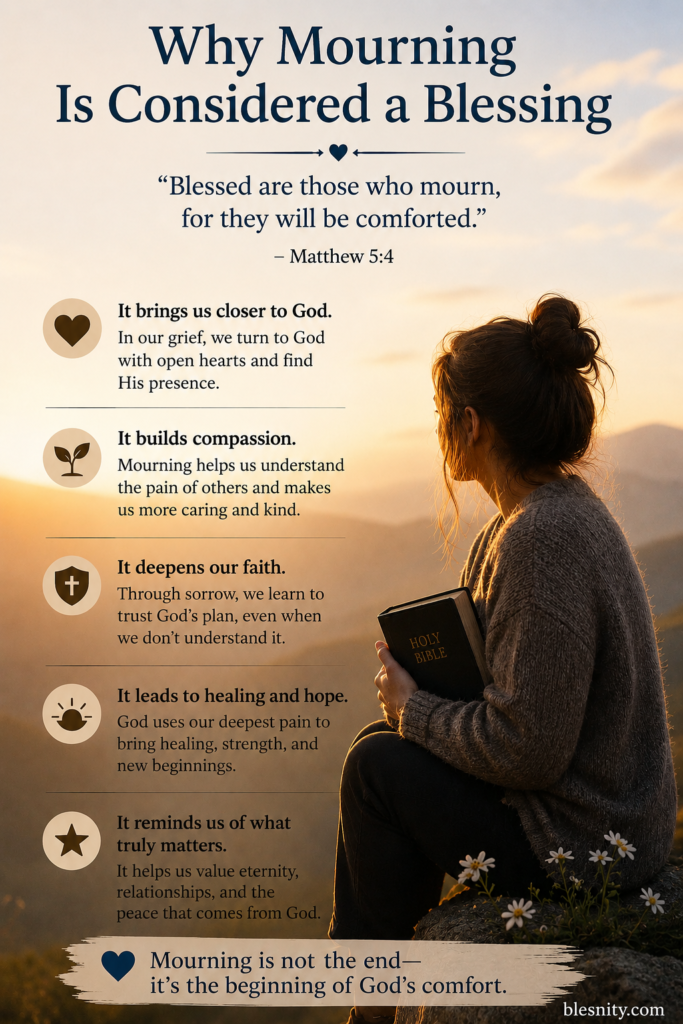
The idea that mourning is a blessing may seem strange, but spiritually it makes sense.
1. It Leads to Repentance
Without sorrow over sin, there is no desire for change. Mourning opens the door to transformation.
2. It Produces Spiritual Growth
When a person recognizes their weakness, they become:
- More humble
- More dependent on God
- More spiritually aware
3. It Brings Us Closer to God
Psalm 34:18 says:
“The Lord is near to the brokenhearted.”
God does not distance Himself from pain—He moves toward it.
“For They Shall Be Comforted” – God’s Promise
The second part of Matthew 5:4 is just as important:
“For they shall be comforted.”
This comfort includes:
1. Forgiveness of Sin
God removes guilt and restores the repentant heart.
2. Inner Peace
The burden of shame is replaced with peace.
3. Spiritual Healing
Brokenness becomes wholeness through God’s grace.
4. Hope of Eternal Life
Ultimate comfort is found in salvation and eternal fellowship with God.
Old Testament Prophecy Connection (Isaiah 61:1–3)
Jesus’ teaching directly connects to Isaiah:
“To comfort all who mourn… to give them beauty for ashes, the oil of joy for mourning.”
This shows that:
- Mourning is temporary
- God’s restoration is permanent
- Joy replaces sorrow
This prophecy is fulfilled through Christ’s ministry.
Jesus as the Man of Sorrows

Isaiah 53:3 describes Jesus as:
“A man of sorrows, acquainted with grief.”
Jesus experienced:
- Human suffering
- Emotional pain
- Compassion for the broken
- Sorrow over sin and death
This means He fully understands human mourning and offers comfort from personal experience.
Modern Application of “Blessed Are Those Who Mourn”
Today, this verse applies to several areas of life:
1. Spiritual Life
Believers are called to reflect on:
- Personal sins
- Moral weaknesses
- Spiritual growth
2. Social Responsibility
Christians mourn injustice in the world:
- Poverty
- War
- Oppression
- Violence
3. Emotional Healing
People facing grief, anxiety, or loss can find comfort in God’s presence.
Common Misunderstandings
❌ It does NOT mean Christians should live depressed lives
❌ It does NOT mean suffering is always good
❌ It does NOT glorify emotional pain
Instead, it means:
✔ God transforms sorrow into spiritual growth
✔ Brokenness leads to healing
✔ Repentance leads to restoration
Spiritual Lessons from Matthew 5:4
1. Awareness of Sin Leads to Growth
We cannot improve without recognizing our need.
2. God Values Broken Hearts
Humility is more valuable than pride.
3. Comfort Comes from God Alone
True peace cannot be found in the world.
4. Mourning Is Temporary, Comfort Is Eternal
Pain is not permanent for those in Christ.
Conclusion: The True Meaning of “Blessed Are Those Who Mourn”
The statement “Blessed are those who mourn, for they shall be comforted” is not a contradiction—it is a divine truth.
Jesus is teaching that:
- Spiritual sorrow is the beginning of transformation
- Repentance leads to restoration
- Brokenness leads to healing
- Mourning leads to God’s comfort
In simple words:
Those who deeply recognize their need for God will experience His forgiveness, peace, and eternal comfort.
FAQs
1. What does “Blessed are those who mourn” mean in the Bible?
It means that those who grieve or repent sincerely will receive God’s comfort and spiritual blessing.
2. Why did Jesus say “Blessed are those who mourn”?
Jesus said this in the Beatitudes to show that God values heartfelt sorrow, repentance, and humility.
3. Does mourning only mean sadness over death?
No, in the Bible it also includes mourning for sin, injustice, and spiritual brokenness.
4. How does God comfort those who mourn?
God comforts through His presence, forgiveness, peace, and hope of eternal life.
5. What is the spiritual lesson of Matthew 5:4?
The verse teaches that true comfort comes after sincere sorrow and turning toward God.